The Norwegian Helsinki Committee runs human rights projects with partners in many countries, funded through grants that require applications, contracts and reporting. The project work used to live in file folders, templates and scattered channels. Today applications, contracts, reporting and project communication are gathered in one secure solution with a self-service portal for partners. The effect is less administration for each case handler, safer collaboration with partners and better documentation towards donors. Secretary General Berit Nising Lindeman describes less searching, consistent case handling and traceable decisions, and is open about the fact that a new way of working takes time to settle.
The starting point: templates, file folders and scattered channels
The Helsinki Committee’s projects involve extensive communication with partners. Before the solution was in place, the work was governed by a project handbook and templates, with documents in electronic file folders per project number and dialogue spread across many different channels.
Secure communication is very important to the organisation, Lindeman emphasises, and that requirement shaped the solution from the start.
Everyday work now: one place, less searching
The biggest difference, according to Lindeman, is that project communication is gathered in one place, together with the assessments that were made and the decisions that were taken.
"It means less searching and uniform case handling. Overall, the project work takes less time for each case handler. Secure login procedures and effective access control safeguard the security of communication and other content."
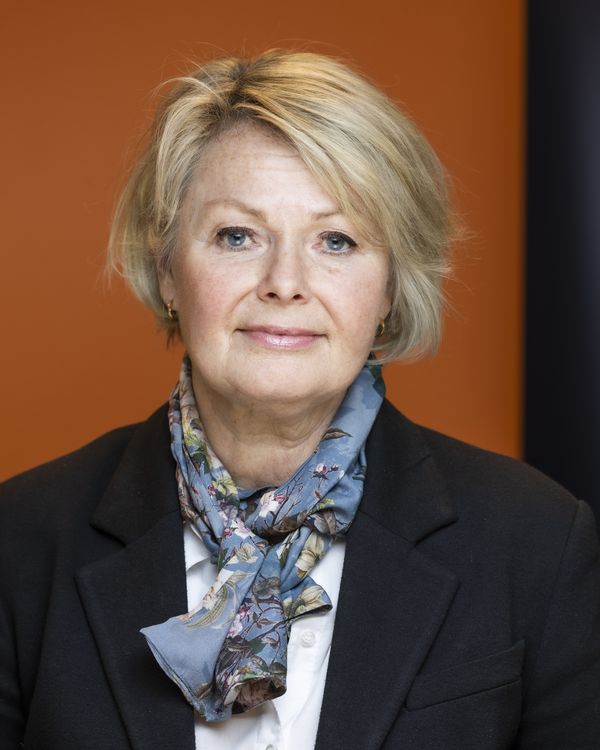
Berit Nising Lindeman, Secretary General, the Norwegian Helsinki Committee
Handover has become simpler and the work less dependent on individuals: when a case handler goes on leave or moves on, the full history is ready for whoever takes over. Lindeman is also open about the transition itself: "It has taken some time for everyone to get used to the new way of working, and we discovered some challenges along the way, such as needs we had not thought of and solutions that were not quite optimal in practical use. We have a good dialogue with Cartagena on these questions."
The partners: announcements, deadlines and documents in one place
The partners use a self-service portal where they find announcements, application deadlines, reporting requirements and all key documents. "Most important of all is that the documents are stored in a secure place, and that the communication is secure," says Lindeman. Some partners found the transition demanding and still have limited hands-on experience, she notes: "We believe this will settle."
Traceability that builds trust with donors
Grant-funded projects are reported back to donors, and a traceable decision history of who assessed and approved what is part of that accountability. "Having a fully available paper trail is important both for our own overview and for our donors, not just for the actual availability, but also for the trust in us as a serious project administrator," says Lindeman.
"Cartagena’s developers took great care to understand our way of working and our needs, and already from the first draft we experienced that this was implemented in the portal. It was a long process to develop the portal, and there has been good follow-up in the first phase of the implementation."
Berit Nising Lindeman on the collaboration with Cartagena
About the solution
The solution is built on Microsoft Dynamics 365, with a secure self-service portal for partners on top. Applications, contracts, reporting, assessments and decisions live in one structured model with secure login and access control,.
Frequently asked questions
Which technology is the solution built on?
The solution is built on Microsoft Dynamics 365, with a secure self-service portal for partners and access control at every level. For security reasons we do not describe the login and security mechanisms in detail publicly.
How was the solution introduced?
The solution was delivered as a limited proof of concept first, and then in full. A new way of working takes time to settle, both internally and among partners, and the Helsinki Committee has a good dialogue with Cartagena about the needs that have surfaced along the way.
What do the partners use the self-service portal for?
Partners find announcements, application deadlines, reporting requirements and all key documents in one place, and have a secure channel for the dialogue with the Helsinki Committee. Documents are stored in a secure place throughout the project.
Does a similar solution fit other organisations?
The pattern fits nonprofits, foundations and others managing grants or project funds with applications, contracts and reporting towards donors and partners. The scope depends on the processes, the security requirements and the systems the organisation already has.
Sources
- The quotes are from Berit Nising Lindeman, Secretary General of the Norwegian Helsinki Committee, given in writing to Cartagena in August 2026 and approved before publication.
- The Norwegian Helsinki Committee: nhc.no
See how you can gather applications, partner dialogue and reporting in one secure portal. In a one-hour mapping conversation we go through your flow from announcement to reporting, and show what a corresponding solution would look like for your organisation.